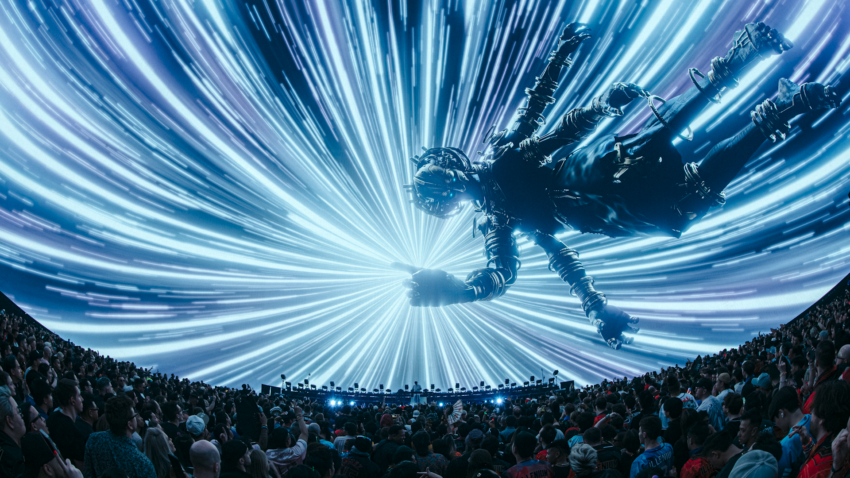
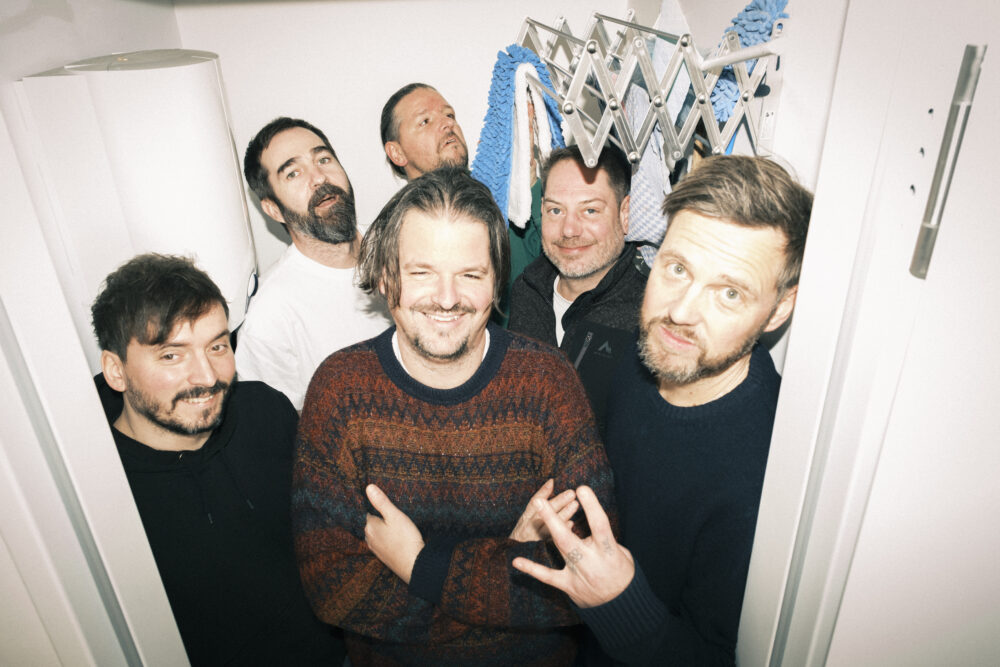
A conversation with Woodblock studios naturally turned into a brain stew that should be translated into an episode of an adult animated series. Here, the Berlin animation studio’s CEO & Executive Producer, Ilija Brunck; Abstract Creative Lead, Chief Creative Officer (CCO) & Director, Fabian Pit Pross; and Executive Creative Director, Jan Bitzer, put us in tune with their mindsets of trusting their intuition, intuition that manifested immersive experiences at Sphere Las Vegas for Illenium and Anyma.
Plus, we talk pump-up-music and be the first to hear about universes they are building, among other interesting points to sit with.
FADE IN:
WOODBLOCK STUDIOS — BERLIN — LOS ANGELES — PRESENT DAY: YEAR, 2026:
thatDROP: Okay, since this is a music publication, what has been your pump-up song lately? Or what artist have you been into recently?
Fabian Pit Pross: Yeah, well, I’m following the Fred again.. livestream on YouTube. It’s super cool. Do you watch it?
thatDROP: Yes. He is inspiring. How about you guys? Anything come to mind?
Jan Bitzer: What’s on repeat right now? It’s definitely the new Boards of Canada album. And Aphex Twin is going to re-released Drukqs, so that’s also pretty cool. Yeah. I’m not really that much into new EDM stuff. I’m more of an old-school ’90s techno kind of guy. Warp Brothers and all that London stuff.
thatDROP: Good word. And Ilija, last but not least?
Ilija Brunck: For me, completely different. For me, it’s all salsa, most of the time. The last concert was Rubén Blades in Berlin. Mainly Latin rhythms for me.
thatDROP: Since music has genres, but does animation have distinct styles? And what are some of your favorite niche or lesser-known animation styles?
Ilija: Animation style is an interesting topic. It’s also quite connected to our history as a studio.
Generally, most animation studios have a distinct house style. Some studios focus purely on 2D animation, others on CG, and even within those categories they can have very specific styles.
We’re proud that Woodblock doesn’t have one specific style. We can do a wide range of styles, and we love that because there’s so much learning involved. We’re always happy when we can work in different styles.
Historically, we also had another label that we started with called Polynoid. Maybe you’ve seen that in your research. We released a couple of short films there, and with those projects we did have a very distinct style: darker, very high-end CG.
That’s a style we still think is very interesting and very close to our hearts. But there are so many different styles, and we love following all of them.
Jan: You mentioned genres earlier. There’s definitely something that gets my attention when I hear animation combined with a particular genre. It’s dear to my heart to say that animation isn’t a genre. Animation is a medium.
It’s basically a tool with which you can make films. You can use 16mm film, or Christopher Nolan likes IMAX 70mm, for example. People use other kinds of tools, too. I always like to think of animation as a tool or medium with which you can make a genre film.
A horror movie is a genre. Science fiction is a genre. Animation isn’t the genre; every genre can be animated. It’s just the medium we grew up with and know best to express ourselves.
thatDROP: What would you call Space Probe Force‘s animation style? Is there a particular name for it? Are you trying to weave some genres together?
Ilija: If you’re referring to the Gravity Push episode, from a pure visual perspective it’s more like the typical Pixar style we know. That’s kind of how it looks. It’s more tactile and CG-feeling.
But I think the interesting thing is more in the animation movement itself. It’s the physical comedy that it comes closest to.
If you had to put words to it, it’s probably something like physical comedy.
thatDROP: Yeah, I see that now. Well put.
Pit: In the end, animation is just the tool that enables us to create images that don’t exist in reality. It gives us more freedom.
What Jan said is exactly right. You can do anything with it. What we do is create film, and we want to channel our creativity. Animation is just our medium of choice.
The Evolution of Animation
thatDROP: What have you seen developing in animation recently? What’s progressive to you guys right now?
Pit: From my end, there’s definitely something we’ve seen with The Backrooms. A movie came out that A24 produced, and the director was basically a kid coming from a YouTube community. He’s a self-taught Blender artist, and Blender is one of the programs that we use.
What I see lately is this world of community-driven content and content creators making the jump into the Hollywood system. They start to mingle with Hollywood and get big backing behind them. That’s definitely a new development. We didn’t have that when we started making films.
Ilija: There’s another interesting aspect because you mentioned it, and it’s always an interesting topic these days, but in animation it’s particularly interesting.
With everything that’s developing in terms of tooling, generative AI and everything else, there’s obviously a strong fear in the animation community about whether our industry will continue to exist.
But at the same time, you can clearly see that it doesn’t lead to people doing less. It actually leads to the opposite. The community and the audience are celebrating handcrafted styles.
Styles where you can really see something was made by hand, where there’s real artistic value to it, are rising.
There’s almost this counter-movement: if computers want to take our work away, then we just do more by hand. We do it more artistically and more interestingly. It’s beautiful to see how this brings the community together, and how our community is on the forefront of that.
thatDROP: You’ve got to differentiate yourself from AI. What about you, Pit?
Pit: For me, it’s really two things. The one thing is that the process of creating content and bringing it to a lot of people has been democratized by several things. It’s gotten easier to create stuff, and it’s become easier to bring it to people. The other thing that definitely fascinates us is the comeback of consuming things collectively.
What we’ve done in terms of immersive events, like Sphere, is completely different from experiencing that kind of thing at home, alone, on your phone, versus experiencing it with many people. I think that’s something that will become much bigger than it is at the moment in the future.
Trusting Your Instinct & Space Probe Force
thatDROP: Animation hasn’t been celebrated as much in the past. It’s been more silent productions and films, but now it’s a big party. But please tell us, what were your instincts telling you when you started to create Space Probe Force?
Pit: It’s been a very long journey. The story behind SPF is pretty much about one of our partners, Tom Weber. He’s a great artist. He’s super creative, and he just has this drive to sit down and draw something. That’s where it all came from. It’s a very intuitive process.
Most of the time, he’s just not thinking about anything, and then things reveal themselves on paper. The process there was more about finding out what it is.
If this guy paints ten pictures, what do they have in common? Is there a red thread? What do you make of it?
It’s a self-finding process, which is a ton of fun. It’s one of the most interesting processes in general: thinking about identifying what you really want to say with the stuff that comes out of you when you don’t think about it.
thatDROP: I’m glad I recorded that. Plenty of time to reflect on that. Anything else to add about instincts? While you were creating that, were your instincts coming out?
Ilija: I’m not sure how much you know about this, but just to add to that, SPF has a long history. The one thing we learned from it is that it started as Pit told you. Then what we did was force it into being something where we thought, “Ah, cool, somebody will give us money for that. Someone will finance it.”
It lost its track a little bit in terms of its purity and its instinct, and what it actually should be.
We got to a point after we did the episode you’ve seen where we put the reset button and said, “Hey, we don’t want this to be something that we shape because we think somebody will like it. We just want it to be what Tom, the creator, actually wants to create.”
A couple of months ago, we reset the whole universe, and it is now, as a starting point, a comic universe.
You can find it on Space Probe Force’s website, where we’re releasing the first strips. We’re basically releasing a weekly strip, and this is now very pure to Tom’s heart and what he wants to do. This is our strategy with the SPF universe at the moment: let’s release weekly comics as long as we can. Let’s see what the audience can find. Let’s see how long Tom enjoys it. Let’s keep it as pure as possible and see what we can learn from that.
Will we find an audience automatically just because it’s what Tom loves? Will this open up ways to do more animated things? We want it to be as pure and intuitive as possible.
This is the general search we’re on at the moment with everything we do: not trying to do things because we think somebody will like them, but doing things in the way that we actually want to.
thatDROP: It seems like you guys have a beef with people blatantly creating for trends lately. Maybe that’s why we’re meeting. What’s one way you like to stay in touch with your intuition?
Pit: Go on walks.
That’s the one thing. Anything that doesn’t involve sitting in front of a screen. I think that’s the number-one intuition and creativity killer: looking at a screen. If you want to find your inner self, you have to get out there and let loose and kind of do nothing but think.
thatDROP: Yeahh, the dance floor is great for that too.
Jan: It’s interesting. I actually told Pit that story earlier. I recently read about Ian Fleming and how he wrote the James Bond books. He wrote down his daily schedule and how he did that, and it was very interesting to read. He had an hour where he said, “I’m going to write 1,500 words in the morning and 1,500 words in the afternoon.”
The rest of the day was basically things like swimming, listening to birds, having gin and tonics, playing Scrabble with his wife.
I found that very inspiring. It goes along with what Pit just said. It’s good to actually do something completely different because you cannot force what we do. Whenever you try to squeeze something out, it’s never the best thing that comes out of it.
Building Intuition Within the Team
thatDROP: Ilija, is there some special isolation tank that you go into?
Ilija: For me personally, it really is walking. That’s the main thing. I try to walk as much as possible. It really helps me in that process.
It’s such an interesting question because it’s the main thing we’re focused on at the moment.
We’re partners in the company, but we’re a team of 40 to 50 people. The quest we’re on is: how can we empower everyone on the team to follow their intuition? Find out what they’re inspired by. That’s the main thing, actually.
Pit: On a side note, this also means that whenever you want to talk to Ilija, you have to go on a walk with him, whether you want to walk or not. I mean, I like walking too, but sometimes I also just wants to sit down.
thatDROP: So do you have like a mandatory ‘walk time’ at the office? haha What do you do to encourage your team or stretch that muscle of intuition?
Pit: People go on a lot of walks with Ilija, right? Every time I’m set up for a walk with Ilija, I’m like, “It’s the walking again.”
I think actually walking with another person kind of amplifies the thing, especially if you already have something prepared in your head. Then you can start bouncing it back and forth. It’s a pretty good process.
It’s super funny because most of the time you just start walking and talk about nothing, or it’s just small talk. Then it gets more to the point the further you walk.
Every time at the end of the walk, it feels like you’ve actually achieved something.
thatDROP: Aw, I just want a picture of you two taking a walk. Ok so how do you know if your intuition is uncompromised? Is there a stress test we can put on our intuition to make sure it’s not biased? Maybe we can create a checklist right now.
Jan: That’s a very good question.
thatDROP: Thanks, kinda it’s a freedom-of-thought kind of question.
Jan: You can philosophize about that. I don’t really know if I have a definite answer. How do you know that your intuition isn’t compromised? Because it’s a subconscious thing.
Usually, I think you’ll definitely know after the work is done. In the aftermath, when you clear your head, you’ll know: has this been a true vision, or has it been compromised without me knowing it? That’s the definite safe point, I would say.
But during the process, there are checks and balances.
My way of working is always to bounce things off other people a lot. When you’re in the process, you have a certain tunnel vision. You see it from your point of view.
It’s always good to bounce things off the other guys and other people. That sometimes gives you a hint of where you might not have really followed your instincts.
thatDROP: Any other things on that checklist?
Pit: One thing we came up with—and it’s probably not true for all use cases—is that if you look at people who have really found the one thing they love, they redo it every time. It’s the same thing, but it’s development.
If you think of great artists, they’re 100% recognizable.
The question we often ask when we talk to someone about an idea is: is it one thing you can come up with, or is it an endless source? Do you have 50 examples of the thing you want to do? That’s an interesting check.
Is it just something that came to your mind because you were inspired by something, making it a one-off? Or is it so essential to you that it can develop into something that’s never-ending? It develops, but it’s always the core of yourself. That’s one of the tests we’re always trying to put down and see if it holds up.
thatDROP: Thanks. And Ilija?
Ilija: Once again, as Jan said, it’s another great question. It’s interesting how much you’re on point with where our mindset is at the moment.
This is really the one thing we’re trying to crack.
We’ve been doing this work together for 20 years, so it’s a pretty long time span. We haven’t thought about this topic too much for the biggest part of those 20 years—intuition and everything. It’s something we discovered a couple of years ago: how important it is to listen to ourselves and not to outside factors, but to really have it come from inside. Now it’s the main topic we’re thinking about and tackling in many different ways.
There’s one process we established as a studio that we call Inside-Out, where we basically try to find out from every team member—no matter what position they’re in or what the task is—what they’re really interested in and passionate about.
It doesn’t matter whether it has to do with animation or something else. We’re really trying to find this out. We’re in the middle of this process, and it’s not an easy task. It’s really hard to think about what it is that really interests you, what you’re passionate about, and what you really want to do in life.
All of this connects back to intuition because the answer is somewhere, but most people haven’t even started thinking about it or haven’t discovered it yet. We’re learning tons from this process.
One of the most obvious things we’re learning is that there’s a lot of packaging that has to go away. That packaging clouds the actual thought about what you really want to do. There are so many outside influences layered on top of it that it’s really hard to get to that core.
But we’re getting more experience with it, learning and talking to everybody. As soon as those things start to get uncovered, there’s a spark that’s happening that’s really beautiful. We hope that throughout the next years and this continuous process, we can find that spark in everyone and also find the easiest process for getting there. We’re still absolutely in the beginning and learning phase of it.
thatDROP: Ok, lets see how this goes over.. What distinguishes ego, fear and wishful thinking? How do you know if it’s not ego, fear or just wishful thinking?
Ilija: I don’t even know how to bring those three together really.
thatDROP: haha OK lets skip it..
Commercial Work & Creative Freedom
thatDROP: Have there been any projects where you’ve been able to follow your intuition, particularly commercial projects?
Jan: For me, definitely the ILLENIUM show—the ODYSSEY show. For me, it was very refreshing and a new standard for having very few guardrails.
thatDROP: I imagine that’s full creative mode. I don’t know if you want to talk about other projects with other brands, maybe it’s a sensitive subject, but is there one that you particularly enjoyed?
Ilija: For us, this is also a big part of our journey. If you refer to commercial projects in the sense of having brands and clients, that’s a part of our journey that we’re very happy about. We started our careers as filmmakers, doing art and short films the way we wanted. We did exactly what we wanted to do just because we wanted to do it. There was nobody telling us what to do.
Then, of course, we started a studio. We had to make money, and through the experience we had, we got very deep into commercial work and working with a lot of brands—all of the brands of the world—and a lot of client work, as we called it back then. But this is creatively very draining for one reason: you basically always have to do what somebody else tells you. There are ways out of it.
The more confidence you have, the more you can do whatever you want to do.
But in the end, you still have to do what they want, and this is very draining. We’re very happy to say that these days we’re kind of out of this world. As a studio, we kind of say we have no clients anymore. Of course, sometimes we do have some, but we’re now more in the entertainment space, and we’re very happy about that. I think the one thing that connects all of this, independently of whether it’s clients or partners that we work with, is confidence.
It’s a really tough challenge in life growing up to be confident—to really have confidence that we know what we’re talking about, that we know what we want to do, and that we have the right intuition.
That’s not something you just gain. For us, we’re still in the process of finding our full confidence after 20 years. But the more you get to that point, the more you can do what you want and what your intuition tells you. Because the receiving end feels this confidence. They feel that you don’t doubt yourself, that you trust your instincts.
I think everything in our work is basically a journey to full confidence.
thatDROP: I am sure that helps those brands allow you to be more creative.
Pit: That’s definitely on point. I think the same thing.
It’s always this play between the trust you’re given and the confidence you have.
The more trust you get, the more confidence you have. The more confidence you have, the better work you can do. The most fun projects we’ve done have always been the ones where we were given trust and could really bring in an opinion. But that’s not always the case.
Creating a Universe: The Big Bang
thatDROP: As far as creating universes or immersive experiences, this might be a fun question. If creating a universe has its own Big Bang, what does that moment look like for you?
What are some critical masses of ideas, partnerships, skills and timing that have to come together before everything suddenly expands into reality?
Pit: I guess that’s the spark Ilija mentioned earlier. It’s that moment when you realize what it really is that you want to create and what your message is. I think that’s the one thing.
A universe can have any size. It can be a global phenomenon, but it can also be the passion you have that you just do for your own pleasure.
I really think it’s about finding that one thing that brings you a ton of joy.
Jan: For me personally, we’ve been doing this for 20 years and I’m still a student. I’m still searching for where this ends. You never know everything, and you never fully know yourself. The one thing about me that I learned that I can say for certain is that in every work, every piece, every film that we do, I’m just chasing that perfect moment. That is my spark all the time.
I haven’t found it yet. I’m always chasing that perfect scene, that perfect moment, that perfect situation where everything just falls into place.
That’s definitely my spark.
thatDROP: How about you, Ilija? Partnerships, ideas, skills—the perfect storm kind of thing?
Ilija: Beautiful perspectives that you guys shared.
I also think if we talk Big Bang—this spark, this energy—there’s one party involved, the creator more or less.
It can be one person or a couple of creators. The thing is that they really know they want to do something. That’s the one thing that matters more than everything. After that, it’s a journey that starts.
Especially in animation, it’s incredibly hard to produce. You need so many people to do it. This means you need so much funding. There are so many complicated processes and so much knowledge. It’s the most complex art form out there, I think, because you basically combine all other art forms and try to create something. It’s wild. But all those things come after this initial spark.
There is an entity that really wants to do something.
Once that’s there, everything else is just going step by step: finding the right people, finding the right team, finding the money, finding the funding, finding the distribution. All those things come after this one entity really wanting to do something and creating something. That’s the Big Bang moment. It’s not often that this happens. It’s unusually rare that this feeling of really wanting to do something and going about it against all the challenges you find actually happens.
thatDROP: You’ve gone down paths and started creating, and then you just kind of back out of something sometimes.
Ilija: That’s not it. Exactly.
The Building Blocks of a Fictional Universe
thatDROP: Have you recently been working on building universes? If so, please share a little about the building blocks.
Jan: We all do somehow. Should I start? I’m currently doing my Inside-Out projects.
I’m writing my first feature film script. I’ve never done it before, so I’m learning on the go.
As far as the fundamental building blocks, it brings me back to how everybody has their own approach. Mine started with a scene that has been in my head for 20 years, since I started hanging out with those guys. I knew that at some point I had to make something out of it. Currently, I’m building a world around that scene and developing a storyline.
I’m heavily involved in world-building right now—finding out what flavor, what language, what film language, and what genre this project will take. That’s the process I’m in right now.
thatDROP: Awesome.
Jan: You are actually the first one to know.
thatDROP: Yeah, it felt like that, thank you for sharing! Pit, anything else you’d like to share, or keep it a mystery for now?
Pit: I’m just writing. We’re using the Miro board. We’re using that a lot for mind maps—basically collecting all your thoughts. It’s kind of like a pin wall where you put all your imagery. Thoughts happen all the time. That’s what I’ve realized. You’re taking a shower and then it just hits you.
First, you record it on your phone, then you go to the office and put it on your Miro board.
It’s there for later when you need that idea.Ideas mostly come when you’re not sitting in front of the computer trying to have an idea. That’s normally not how it works.
thatDROP: Anything else to add for the moment, guys? Programs you’d like to use to start building a universe?
Pit: I still have to go on more walks to turn that abstract cloud of stuff into something that follows certain rules. Of course, there’s always a ton of components to creating stuff.
Music is extremely important to me.
Then, of course, there’s the technological aspect—the software we use, the software we have in our hands to create all kinds of stuff in all possible ways. I think the challenge is always that there’s this craft aspect to things.
Everyone, especially here, being an animation studio, has a favorite kind of craft, whatever it might be. Everyone has a certain mindset and interests. The challenge then is: how do you bring that together?
How do you use your favorite craft to express the stuff that lives inside you? That’s the thing we need to find out.
Ilija: One thing to add there, coming back again to this Inside-Out process. The question you’re asking is whether there’s a way to quantify this. Because it’s creative work, where do you start with this Inside-Out process?
We’re starting in the studio. Let’s say there are 40 people. We’re trying to get at what they really want to do, what their dream project is and those kinds of things. We’re thinking, how can we quantify this? We’ve identified that as something we’re trying at the moment. It’s not proven yet that this works perfectly, but we think it will. We’ll keep refining it. At the moment, we think one thing that’s really important is being able to simplify it so that everybody understands it very quickly. We think there are three main points.
The first is: What is it about?
That’s really one thing to have clarity about. What is it actually about? What do you want to say with it?
The second is: What’s the format?
Is it a series? Is it going to be a feature? Is it going to be something handcrafted? The format needs to be specific. It’s very important to have clarity about that.
Then the third one is: What is the audience interaction?
Not only who is the audience, but how does the audience interact with it? Is it an art piece in a museum? Is it something that lives online on social media? Is it something that’s best experienced at a place like Sphere? How does the audience interact with this?
We have the feeling that those three building blocks are at the base of a universe.
If those questions can be answered in a simple way so that everybody understands them—and simplicity is very hard to achieve—then you already have a lot of clarity in terms of what you can build. Having that is a great starting point for actually going out and building it.
Woodblock’s Original Universes
thatDROP: You do have a couple of universes in development, right?
Ilija: We call them originals here at Woodblock. As we talked about before, Space Probe Force, or SPF, is one that we recently relaunched as a geeky comic strip. We’re excited about this one and learning a lot. We’re very happy to have it out there. There’s very long-term planning for it, seeing how it develops.
The second original that follows this line a bit more is from one of our creators. Helen Choi is her name. We’re in the last steps of getting ready to publish a universe called Blue Marble, which is an adventure universe set on a distant-future Earth where they rediscover the art of cooking.
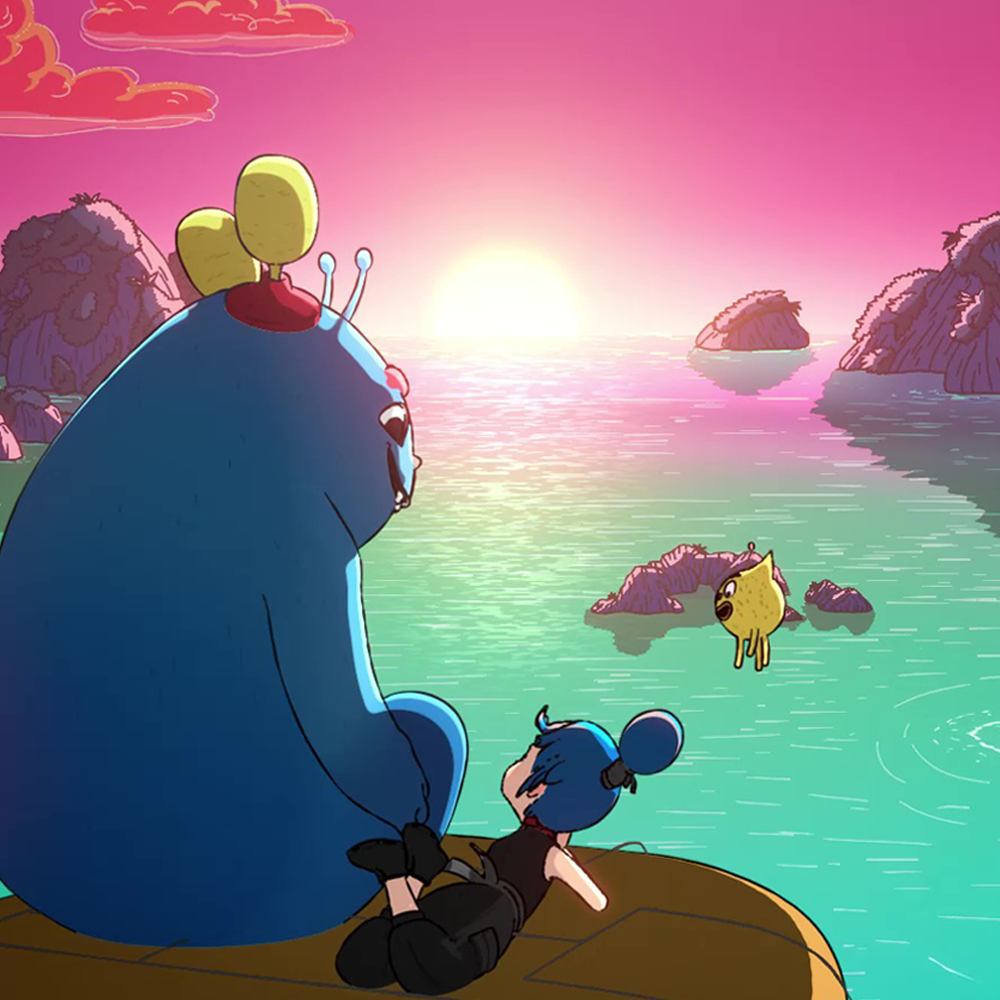
It’s very food-focused. It’s a beautiful adventure that we’re looking forward to launching to the audience. This is heavy universe-building, so it’s a very fun one.
Then we have a third original in development called Dark World.
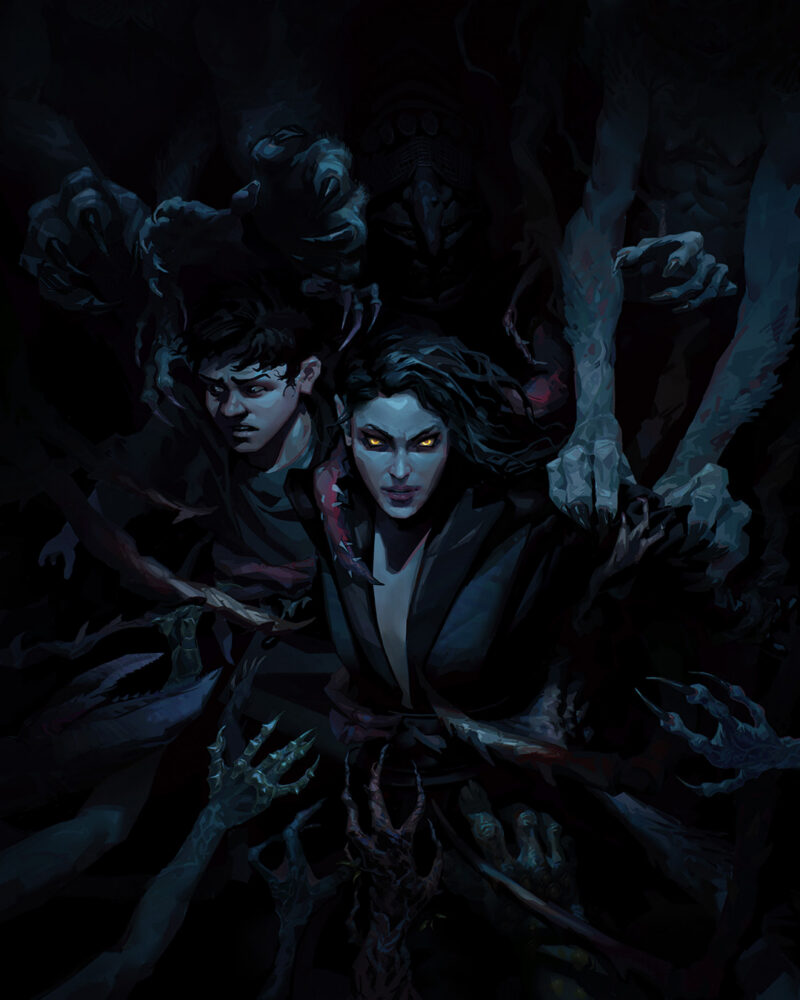
At the moment, it’s both a series and a game, where we tell stories around mythical creatures in the world. It’s another very adult-focused, more fantasy-horror universe, but also a very beautiful one. Those are the three that are most specific at the moment. Then there is a batch of next universes coming.
There are three to five that are cooking.
This is kind of the ambition we have in general. Some of them are going out, others are developing. For us as a studio, this is the way we think we can fulfill our dream of being an independent studio, always living from our universes. Basically, we always have some of them going out and some of them cooking in the background that can go out afterward.
VR & Immersive Storytelling
thatDROP: Have you guys done any VR work in the past?
Ilija: We’ve done quite a bit of VR work. It’s a fun medium. We learned a lot from it, too. We’re using a lot of VR these days, but more as tooling.
For example, if we work for big venues, we previsualize them in VR.
We build the venue or the stages we work for. We build a digital clone of them in VR, in Unreal or whatever tool we’re using. We have clones of the screens on there. Then we can look at the content in VR. We actually visit the venue or the stage in VR so we can previsualize how the show and the visuals work on it. That’s our main way of working in VR at the moment. Of course, VR has very interesting perspectives in terms of storytelling.
But getting back to the point that Pit made before, the one big problem we have with VR is kind of the same as we have with phones.
It’s isolating. It isolates the consumer in a way, which has interesting things to it. But at the moment, we’re much more excited about community experiences. That’s why we love cinema so much. The special thing about cinema is that you enjoy something together and there’s collective emotion shared and received. That’s the same for concerts and other venues. Collectively experiencing something has so much power over being isolated.
At least, we’re very excited about this at the moment. I don’t want to demonize the other stuff.
thatDROP: That’s just following your intuition.
The Future of Shared Entertainment
thatDROP: Maybe there are some studios at FMX you’re impressed by.
Ilija: I think that’s what we started talking about.
The one thing we’re really excited about and love is exactly this communal experience.
This is one of the biggest trends we see. It’s not even about trends. I personally see it as one of the most important things developing. It’s personal for me, too. I have a 16-year-old son. Seeing how much time this generation spends on their phones—we all have the same addiction with it.
Personally, I also spend way too much time on my phone. I think most of us do. I have the feeling this time is coming to an end. Humanity collectively is understanding that this is a waste of our energy and of our being human.
Going out, doing things together, experiencing things together—that is the one thing that will shape the entertainment industry in the time to come.
Screens will not go away. We love our screens and our technology. But once again, Sphere is a beautiful example of how this can be played and how this can be done. Cinemas are too. For me, this is absolutely one of the biggest trends here. Shared, communal, immersive experiences are going to be so much fun in the next decades.
Jan: For me, and this is more from the storytelling or creative aspect, what excited me after the ILLENIUM project as well was seeing a comeback of the old days where you watched a movie and there was a guy playing a piano.
I see that especially with EDM. There’s more storytelling coming into the venues behind the performances. It goes along with the sets. I think right now this is just the start of it all. I hope there’s going to be a really nice fusion where music and storytelling go together.
It’s kind of like opera with a new form, right?
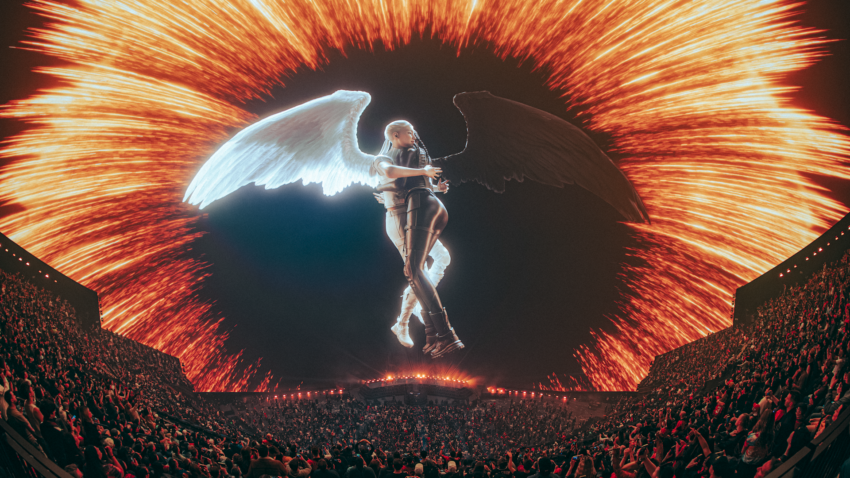
When you go to a show and you can dance but you also get a story being told or a message being conveyed, it goes beyond just a normal live set or a normal DJ set. That’s something I would definitely push for more.
I think the ILLENIUM project was a good start because it kind of proved that it works.
People can follow a story, but at the same time they leave the venue totally sweaty because they had a good party as well. That’s what excites me about the future.
thatDROP: Anything new you’d like to add?
Pit: I totally agree. People nowadays can consume any music they want all the time. That’s very different from the times when we grew up. I kind of feel like we’re in a time where music expands into visuals to give it more weight and make it something very special again. I very much agree. That’s a very interesting development. If you think about movies like K-Pop Demon Hunters, it’s a very close connection of music and image, which I think for all of us here is one of the greatest things. When music and image really form one union, that’s the best thing.
AI, Music & the Role of the Artist
thatDROP: I’ve got to admit, sometimes I’m listening to music and I don’t know it’s AI when I’m doing some work and there’s some background music. But most of the time it’s obvious.
I guess my question is: is AI taking over the world and artists won’t be needed anymore soon? True or false?
Everyone: False
Jan: But quickly, you were talking about music. I moved away from streamers because music is too important to me.
I’m going back to old school—Bandcamp, finding artists, listening to radio, discovering music, buying it and then really cherishing that I found it.
Because that’s something that streamers and algorithms took away from us. So I’m not there anymore. And it is so much more fun.
thatDROP Yeah. Good technique. Good.
Pit: The question you’re asking kind of contradicts itself, right? Can an artist be replaced by AI? That would mean that AI is able to create art, which I don’t think is possible—or will be possible. I don’t know. That’s not how art works. But we’ll see.
Ilija: I think that’s an interesting point. If technology keeps advancing—and if we don’t completely mess up the planet and all die as humans—there’s a chance technology creates a world where everybody can live a prosperous life.
If we get to that point, I have the feeling that probably the one thing that will be left is art.
If machines handle everything else, then maybe all humans will be artists in the end. That’s probably one thing that won’t be taken away by technology: art and artists.
thatDROP: Yeah, definitely. I think the artist or the expert in a field could actually use AI in the best way.
Jan: Of course, we’re having a lot of these conversations right now, and there are hundreds of different arguments about why it’s a false argument that artists can be replaced.
My favorite, my go-to argument, is that art—or creating a piece of whatever it is—is always an emotional piece of communication.
It’s between a sender and a receiver. The sender has an intent, and the receiver wants to understand that intent. It’s basically communication. That can only happen between humans. If one of those components is a box or a piece of an algorithm, then there is no communication happening. Then you’re basically just—it’s preconditioned. It rules out what art is.
thatDROP: Yeah. It’s hard to imagine that being the case, definitely.
thatDROP: I don’t want to take any more of your time. It’s been an hour. I have more questions, OBVIOUSLY, but I’m curious: are there any old projects, maybe something you guys worked on together in college or something from high school?
Ilija: I’m not sure if you’ve seen it, but there’s a piece of film that we did in college. That was our graduation film.
It’s called Loom.
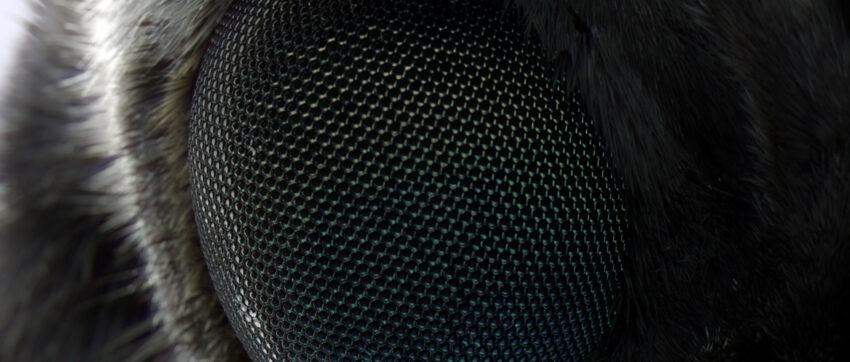

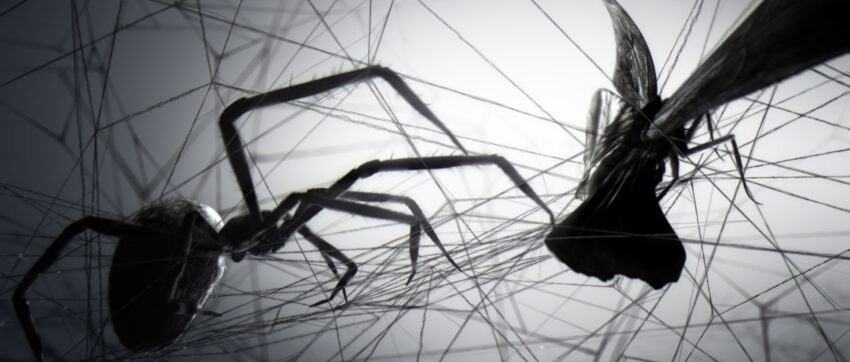
It’s about a moth getting eaten by a spider.
It’s a very important film for us. We were all founders of the company and did it together. It didn’t start our journey, but it ignited our journey together. It has a lot about our intuition, the topics that are important to us, our filmmaking style, our storytelling style and everything. There’s lots to talk about there. If you want, you can check that out. It’s on YouTube somewhere. Type in Loom Polynoid.
thatDROP: Got it. Thank you.
Really, it’s been an hour, and I appreciate your time.
Ilija: Yeah that was fun.
thatDROP: Yes, I’m so glad we did this. I’ve been anticipating this for a minute, hence the deeper questions Haha
Collectively: Cheers