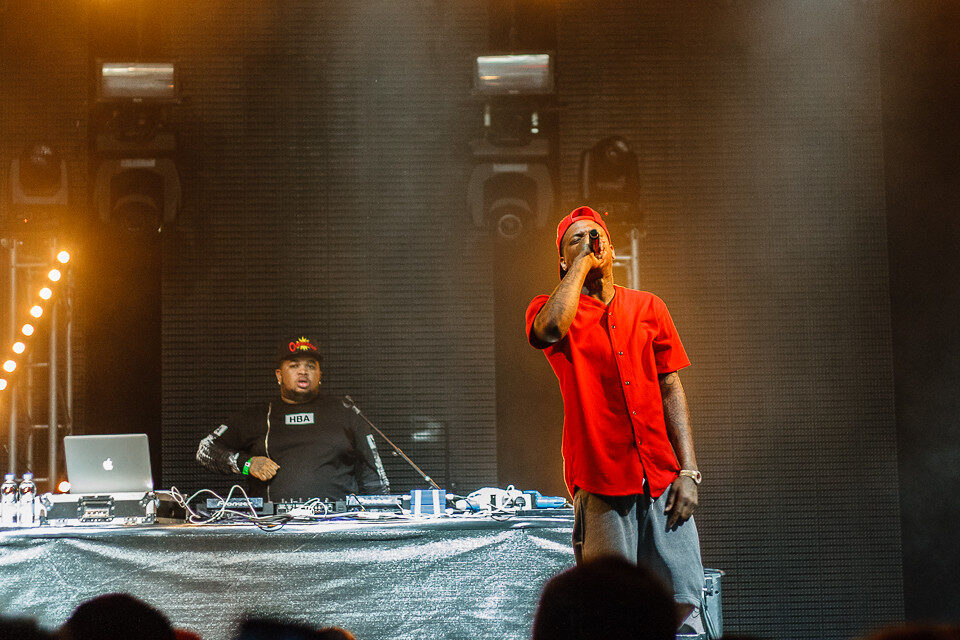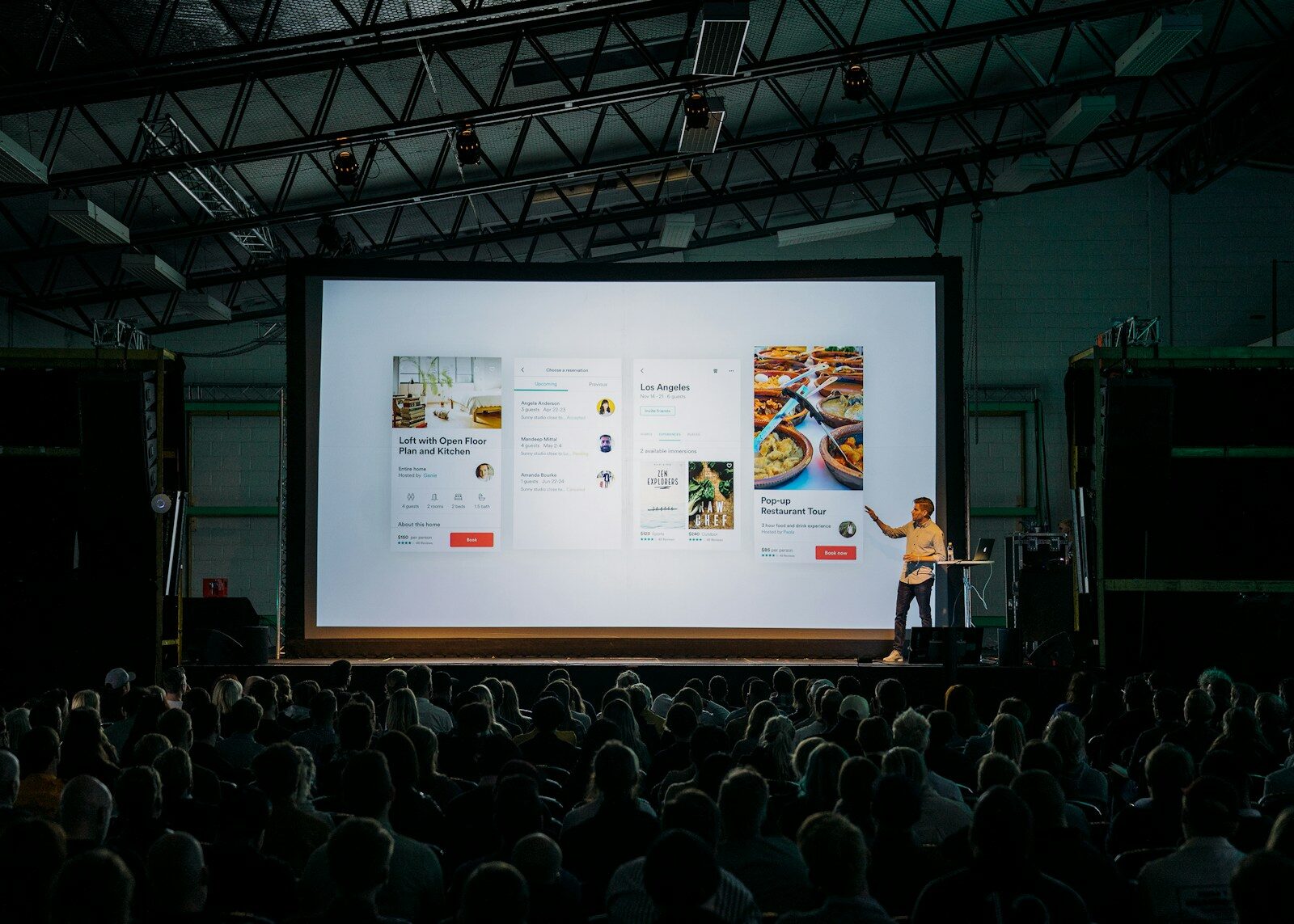
A wall of wobbling bass might shake the crowd’s ribcages, but it’s the wash lighting that tells them how to feel about every drop. Wash fixtures bathe the stage, performers, and sometimes the audience in broad strokes of color that set emotional cues long before strobes or lasers kick in.
In the era of affordable LEDs, ignoring wash design is like spinning a headline set on laptop speakers.
Residential LED lamps captured roughly 50% of global sales in 2022, up from just 5% in 2013.
The same LED boom that’s lighting living rooms is also slashing entry costs for mobile DJs and small festival promoters. That means impact is no longer a question of budget; it’s a question of strategy.
The Three Pillars of an Impactful Wash
Color Temperature & Mood
Color temperature—measured in Kelvin—runs from warm soft-whites (≈ 2,700 K) to piercing blue-whites (≈ 6,500 K), with actual candlelight burning even warmer at around 1,850 K. Lower temps feel intimate and nostalgic; higher temps feel clinical or electrifying.
Anecdotally, lighting designers report that deep-house crowds melt into warm ambers, while techno fans perk up under colder hues.
Typical off-the-shelf LEDs now exceed 100 lumens per watt, while best-in-class fixtures top 200 lm/W. Efficiency gains let you dial in nuanced palettes without tripping breakers. More importantly, color temperature interacts with backdrop color to shape emotion:
A 2024 Psi Chi study found a statistically significant interaction (p=.046) between background color and lighting temperature on negative affect — mismatched combinations (e.g., warm background with cool light, or cool background with warm light) produced lower negative affect than matched combinations.
Translation for DJs: If the LED wall behind you skews blue, a warm front wash can subconsciously relax the crowd between drops.
Beam Angle & Coverage
Beam angle controls how wide each fixture spreads. Narrow beams (15–25°) punch through haze and double as subtle aerials; wide beams (45–60°) blanket risers and drummers.
Plot your stage on grid paper, then use the throw-distance formula (diameter = 2 × distance × tan(angle/2)) to estimate coverage at your fixture height — for example, at a 3-meter throw distance, a narrow 15° beam covers roughly 0.8 m and a wide 40° beam covers roughly ~2.2 m.
As a general rule of thumb, positioning PARs at the down-stage edge of a booth can provide even facial coverage without hot spots, though results will vary depending on fixture count, beam angle, and ceiling height.
DMX Zoning & Pixel Control
Think of DMX universes as playlists for light. One universe handles 512 channels—enough for up to ~170 basic RGB fixtures (at 3 channels each), though the RS-485 spec recommends no more than 32 devices on a single daisy chain before using a splitter.
Segmenting wash groups into “zones” (e.g., up-stage, mid-stage, audience) lets you trigger chase effects or color swaps that match drum fills. Pixel-mappable bars go further, turning every diode into a beat-synchronized graphic.
Even if you start with a basic controller, choosing fixtures that accept Art-Net or sACN means you can scale your rig without rebuying lights.
Tiered Gear Checklists
Entry-Level Rig (< USD 500)
- 4 × LED PAR cans (RGB or RGBW), 40° beam
- Manual 192-channel DMX desk
- Two lightweight T-bars
- Gaffer tape & safety cables
For rugged fixtures approximately USD 44–50 each, check out the SHEHDS 7 × 18 W mini PAR—its aluminum housing survives tour van toss-arounds while delivering solid stage wash lighting using as few as 6 DMX channels (in its compact 6-channel mode).
Intermediate Rig (USD 500–1 500)
Add USB-to-DMX interface and laptop software (e.g., Onyx, LightKey)
- 2 × RGBWA + UV PARs for backlight punch
- 1 × pixel bar for audience sweeps
- Wireless DMX transmitter to kill cable clutter
Pro Touring Rig (> USD 1 500)
IP65-rated LED wash bars are suitable for sheltered rooftop sets and light rain; for beach or exposed coastal venues, consider IP66 or IP67 fixtures for adequate protection against wind-driven spray and sand.
- 2–4 moving-head washes with zoom (4–45°)
- Art-Net node and at least two universes for pixel content
- UPS backup and power distro with individual breakers
Programming Scenes: Genre-Specific Recipes
- Trap 140 BPM – Strobe-synced warm whites every fourth kick; desaturate to warm white (~3,200 K) during vocal breaks.
- House 125–128 BPM – Cool blues at daylight (~5,600 K) on verses, gradual saturation bump to teal during build-ups, then full-venue white flash on drop.
- Psytrance 138–148 BPM – UV wash at 365–395 nm for decor pop; pixel sweeps in a custom-programmed rainbow sequence across bar fixtures.
Remember: Mixing cool and warm conditions — either a cool-hued background with warm wash light, or a warm-hued background with cool wash light — produced lower negative affect scores within each lighting condition compared to matched same-temperature pairings.
Applied to stagecraft, that suggests high-contrast cool backdrops may keep ravers mentally locked onto the DJ even during long mixes.
Energy Efficiency & Sustainability
LED wash fixtures sip power compared with legacy halogens. Swapping eight 300 W PAR 56 cans for eight 40 W LED PARs saves 2,080 W—enough to run a small fridge and your DJ controller simultaneously.
Over a 10-hour festival day, that’s 20.8 kWh saved — up to an 87% reduction in draw per fixture, with actual dollar savings varying based on local electricity rates and hours of use. Annual savings per fixture range from approximately $73–$91 (at $0.10/kWh, 8 hrs/day) to $219/year (at $0.20/kWh, 12 hrs/day).
For standard commercial replacements (e.g., 400W metal halide → 150W LED), up to $5,000–$7,000/year for 1,000–1,500W HID replacements, and $7,000–$12,500/year for 2,000–2,500W HID high-mast systems (at 12–18 hrs/day operation).
Small numbers scale fast when you multiply by three stages and a full season.
Quick Troubleshooting Flowchart
- Flicker → Check DMX cable > replace with shielded > verify universe addressing.
- Color shift → Reset white balance preset > confirm Kelvin lock in software.
- No response → Test fixture in standalone mode > swap to known-good output > reboot Art-Net node.
[Still refining your tracklist? Dive into thatDROP’s “House Music Essentials Volume 1” for fresh inspiration.]
Caveats & Counterpoints
Venue power limits and ceiling heights can undo the prettiest pre-viz file. Always bring clamp adapters and ask for the exact circuit layout before load-in.
Finally, nothing replaces a dedicated LD; in our experience, this framework gets you most of the way there, but a seasoned human can save a show when the Art-Net hiccups.
Conclusion
Wash lighting is the unsung hero of electronic sets, guiding emotion in ways the crowd feels but rarely sees.
By mastering color temperature, beam coverage, and DMX zoning—and choosing gear that scales from coffee-shop gigs to 3,000-cap tents—you’ll move beyond “lights on” to true visual storytelling. Now dim the house, cue the intro track, and bathe the stage in your signature glow.