Crossover of the ages The World Cup and EDM: Each Tournament Begets a Generation of Electronic Anthems
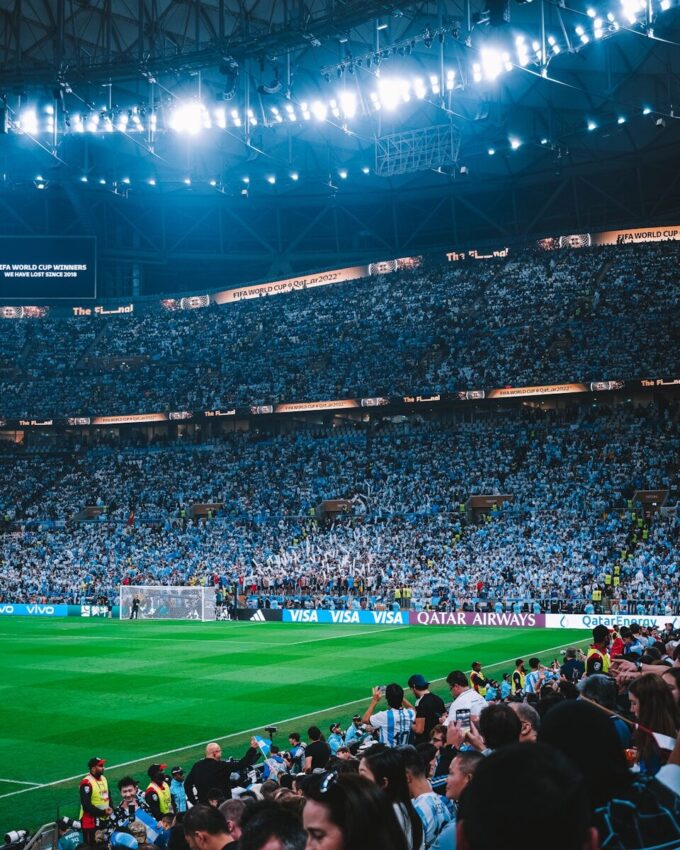
Picture the tunnel walk. Eighty thousand souls are crammed into a stadium, collective breath bated, scarves lifted in hues that mean everything to the bodies bearing them. Then the beat kicks in. Not just any beat — a specifically engineered infusion of rhythm and melody meant to convey the mood of an entire planet in three and a half minutes.
This is the World Cup. And with or without your knowledge, electronic music has been subtly underwriting that moment for more than three decades.
The First Blueprint: Giorgio Moroder and Italia ’90
Long before electronic music had a chair at the world’s biggest sporting table, it put its foot in the door — thanks to one of its most consequential architects.
“Un’estate italiana” — aka “Notti Magiche” in Italy — was written by Giorgio Moroder and served as the official song of World Cup 1990, the first tournament to have an official song. Moroder, who is widely credited with being the father of Euro disco and one of the founding figures in modern electronic dance music, introduced synthesizer-driven production to a global football audience for the first time. The song was a cultural landmark — reaching number one in both Italy and Switzerland, it also stayed the country’s best-selling single for nine consecutive months.
What makes this moment notable isn’t just the song itself. It’s what it symbolized: that even in 1990, electronic music had the emotional circuitry to bear up under the gravity of a World Cup. That template would take decades to blossom in full — but the outline had been sketched.
The Game That Hooked a Generation
The World Cup’s sonic identity, for millions of fans who were born in the late 1980s and ’90s, wasn’t forged inside a stadium. It coalesced in a bedroom, through a gaming console.
The FIFA video game franchise created an unlikely bridge between electronic music and worldwide football audiences. Digitalism, Röyksopp, Deadmau5, Calvin Harris, Avicii and Madeon all had early turnpaler moments on FIFA soundtracks. That wasn’t just a sync placement for many of those artists, it was a defining one. At a moment when radio was paying no mind to electronic music unless it was topping charts, FIFA was giving space to artists like these.
Consider what that looks like in practice. A 15-year-old in Lagos, São Paulo or Jakarta wasn’t buying music magazines or listening to specialist radio stations. They were playing FIFA. And the music in the menus, and on the pre-match screens, and during the replays — that was their introduction to people who would go on to play Tomorrowland and EDC. EA Sports explicitly framed FIFA soundtracks as annual showcases of global breakthrough artists across genres, and electronic music was always the genre that got the most real estate.
The game did not simply mirror the rise of EDM. It actively sped it up, tournament cycle by tournament cycle.
Live EDM Producers Hit the Formal Step
By 2018, when the World Cup took place in Russia, the connection between electronic music and football’s flagship tournament had far surpassed video-game menus.
The official anthem for 2018 “Live It Up” — which features Nicky Jam, Will Smith and Era Istrefi — was helmed by Diplo, an architect of electronic music. Daft Punk, Avicii, The Chainsmokers, Tiësto, Martin Garrix, Calvin Harris, Kygo Major Lazer and DJ Snake were all part of FIFA’s official stadium anthem playlist for the tournament. EDM not only had a seat at the table — it was the sound in most of the world’s stadiums.
The UEFA Euros had been conducting a parallel experiment. Dutch DJ and record producer Martin Garrix was announced as the official music artist for UEFA Euro 2020, releasing “We Are the People” featuring Bono and The Edge from U2 as the song of the tournament.
The story of how that collaboration came to be says something crucial about the current cultural position of electronic music. Garrix started work on the song three years prior to the tournament. He heard the U2 feel in its guitar intro, and soon enough was flying to Monaco to record it with Bono and The Edge in person — saying he had “goosebumps in the studio the whole time.” The fact that UEFA awarded creative control over the emotional lynchpin moment of its flagship tournament to a 25-year-old EDM producer — and that producer’s instinct was to create from scratch a stadium rock-EDM mashup — tells you everything you need to know about how inextricable the two had become.
Qatar 2022: From Solo to Score
The 2022 World Cup represented a tectonic shift, too. For the first time ever, rather than a single official song, an entire FIFA World Cup official soundtrack was issued — a collection of tracks featuring global artists across multiple genres. The model was a literal extension of what the big EDM festivals have always done: don’t give the crowd one moment, build them a world.
Electronic production fingerprints threaded the Qatar soundtrack, from the bass-driven framework of multiple tracks to the festival-ready energy baked into their construction. The World Cup had embraced the festival logic EDM was two decades in perfecting.
You are set on data up to October 2023.
The 2026 World Cup, which will be co-hosted across the United States, Canada and Mexico, is already sparking its own soundtrack debate of sorts — but this time it’s a conversation happening as the tournament unfolds.
FIFA has unveiled its first official song for the 2026 World Cup with “Lighter,” a performance by Jelly Roll and Mexican artist Carín León and production from Canadian record producer Cirkut. The song mixes country, rock and regional Mexican music — a conscious nod to the cultural crossroads of the host countries. It has already provoked the gonzo kind of global reaction that only World Cup music ever seems to elicit, with fans loudly arguing over whether it measures up to the tournament’s vastness.
Yet “Lighter” is merely the first move. The 2026 effort has been characterized by FIFA president Gianni Infantino as a complete official album, saying that football and music “together uniting the world.” What the final album includes — and if EDM producers are given pride of place in the biggest World Cup yet, with 48 teams and a global audience estimated to number in the billions — is one of music’s most intriguing open questions at this moment.
Why the Bond Goes So Deep
There’s a reason this relationship has endured and deepened over thirty years, and it’s no accident.
The same emotional logic connects the World Cup and electronic music. Both are designed to produce collective euphoria at scale. Both use rhythm, repetition and the architecture of anticipation and release to move large groups of people. A World Cup anthem has to do in three minutes what a D.J. does over the course of an entire set — establish a common emotional state between people who speak different languages, come from different backgrounds and may have nothing left in common except this moment.
That’s precisely the problem that EDM was designed to address.
The jersey at a World Cup serves the same tribal function as the wristband at a festival: both are visible, corporeal markers that you are part of something bigger than yourself. Already, custom teamwear specialists including USportsGear know this dynamic well: the reason a player or a fan puts on and plays in that personalized soccer jersey goes beyond performance or aesthetics — it’s all about who they are, who their community is, and being part of something greater than themselves. That same sensation is precisely what the best World Cup anthems, electronic or not, intend to bring about.
Last Drop and the Final Whistle
From Giorgio Moroder’s synthesizer patterns in 1990, to the FIFA video game pipeline that introduced Deadmau5 and Avicii to a generation of bedroom players, to Martin Garrix recording with Bono in a Monaco studio, to the 2026 album dropping shots right now — the World Cup has always needed a sound capable of bearing the weight of the world.
Electronic music continues to get that assignment. And with the sport’s biggest tournament ever a matter of months away, that relationship is already writing its next chapter.
Which World Cup or Euros track first familiarized you with some artist, sound? Let us know in the comments.